AI-Generated Image
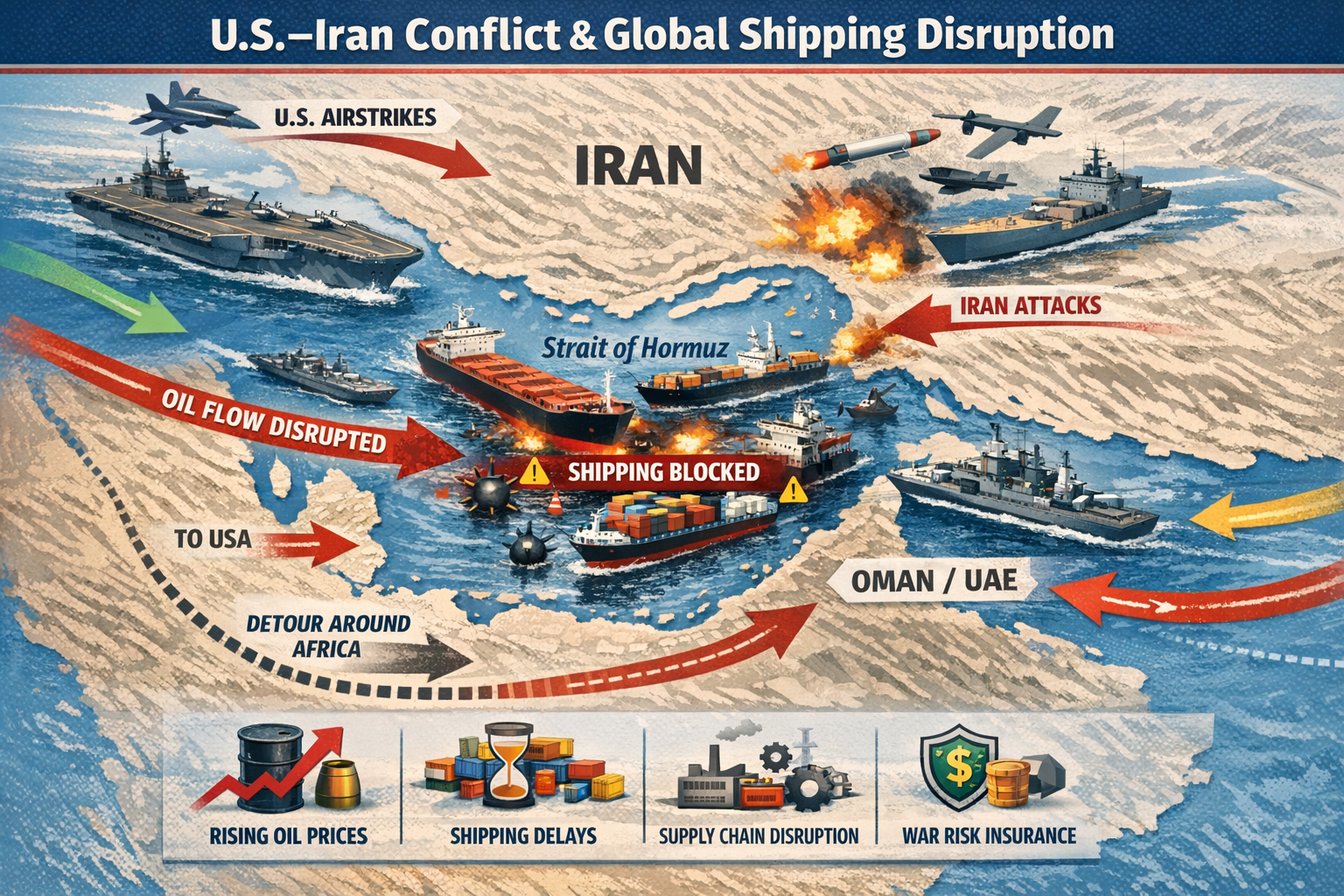
The shipping business has been dealing with fallouts of U.S. tariffs (and reciprocal tariffs from other countries) for a while. The latest conflict with Iran adds complexity to the uncertainty. One of the subjects that gets a lot of airtime is fuel prices. According to conversations with my customers, fuel prices can make up as much as 40% of their operating costs. While ocean carriers can increase their rates (or impose surcharges) to offset the increase in fuel prices, the dramatic increase cannot be fully absorbed. Shipping lines will have to resort to other measures such as slow-steaming or change their routings or vessel deployments.
In the Asia-Europe trade, ocean carriers have already been taking the longer route around the Cape of Good Hope in order to mitigate the war-related risk of going through the Red Sea and Suez Canal. There is no other alternative route. Therefore, ocean carriers are not likely to make any change in this trade. However, there are definitive opportunities to make routing adjustments in the Asia-North America trade to lower fuel consumption.
Typically, ocean carriers have four ways to serve the U.S market through truck or rail services via West Coast, East Coast and Gulf ports (from the shorts to the longer distance and transit time):
Direct route from Asia to the U.S. West Coast ports
Asia to the U.S. East Coast and Gulf ports via Panama Canal
Asia to the U.S. East Coast and Gulf ports via Suez Canal
Asia to the U.S. East Coast and Gulf ports around the Cape of Good Hope
If fuel prices continue to remain high, ocean carriers could start to cut back on their utilization of longer routes. The most attractive route to mitigate the increase in fuel price is the direct route from Asia to the U.S. West Coast ports. This direct route not only provides the shortest distance and transit time, it also reduces the amount of vessels required. Major U.S. West Coast ports such as Los Angeles and Long Beach have tremendous operational capacities, including terminals, truck and rail services. Therefore, ocean carriers may choose to deploy fewer but larger fuel-efficient ship to carry cargoes to these mega ports and turn vessels around faster and at lower fuel consumption.
This may be the next Black Swan moment for the U.S. West Coast ports. As exemplified during the COVID-19 pandemic, these two ports handled mosts of the freights for most of the consumption demands in the costal and inland U.S. markets. But this time around, perhaps there will not be any port congestion since the ports have learned their valuable operational lessons during the pandemic.
